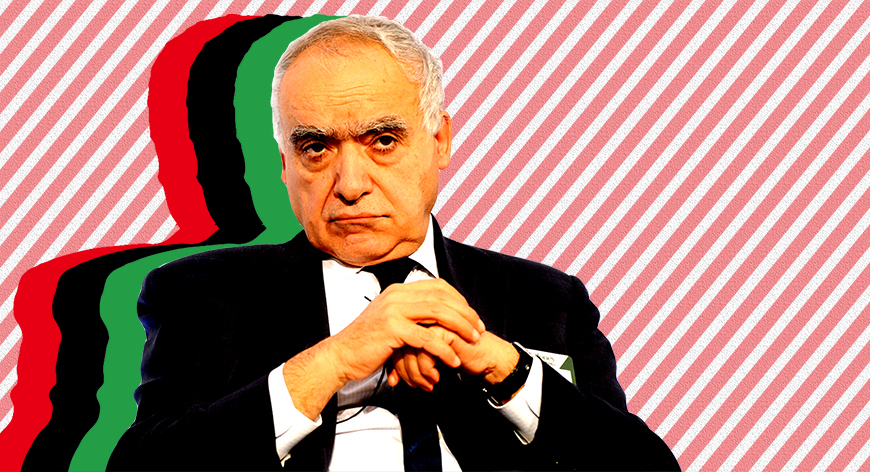
^Image spot’light’ is Ghassan Salamé (Lebanese Academic and more in Reading Reflections)^
Lisa Anderson’s article enlightens us with the interdisciplinary approach between area studies and political science. The Columbia University professor critiques western political scientists who try to apply their grand theories to the middle east, an area too unique to fit their approaches and hypotheses. Anderson posits that western political science approaches towards the Arab world are missing the light (which shines brightest on the region of study itself) and interdisciplinary lenses which are necessary to understanding the persistence of authoritarianism as well as the conundrum that is democracy in the Middle East.
Anderson goes on to explain that the patterns and answers we need come directly from the real world examples and the best evidence comes from local political scientists like Ghassan Salamé rather than western academics like Kramer and Mitchell whose focus on western categories and discourses distort the dynamics of politics in the Middle East through bad policy and scholarship (Anderson, 191). Anderson noted that Islam itself isn’t stopping democratization, but the government’s ability to use Islam for popular mobilization and as the rationale for government resistance to liberalization (Anderson, 197). Anderson continues to highlight Salamé’s insight into democracy in the region through his understanding of Dankwart Rustow’s well-known argument that democracy is the outcome of stalemated conflict (Anderson, 198) which the Middle East has seen very little of. Another suggestion Anderson makes falls under Area studies, specifically other regions around the world that have successfully developed democratic governments and policies for example countries in Latin American and Sub-Saharan Africa. Comparatively these countries can be described as ideal types, a model that political scientists can analyze, tweak, then test in the Middle East.
In our course we can compensate and avoid Andersons concerns by focusing on the persistence of authoritarianism in the region itself and not the supposed solutions to democracy theorized by political scientists.
The outcomes of the Arab Spring created a conflict that stalemated and although the governing bodies in the region are still considered authoritarian, the shift in the nation of Islam towards more democratic policies should be noted. I think even a small change in democratic ideology among citizens is historically significant in the long term development of democracy in the Middle East and North Africa.
A Siege of Salt and Sand explores climate chaos in Tunisia: sea-level rise, desertification, water scarcity, species loss, and its impact on communities.
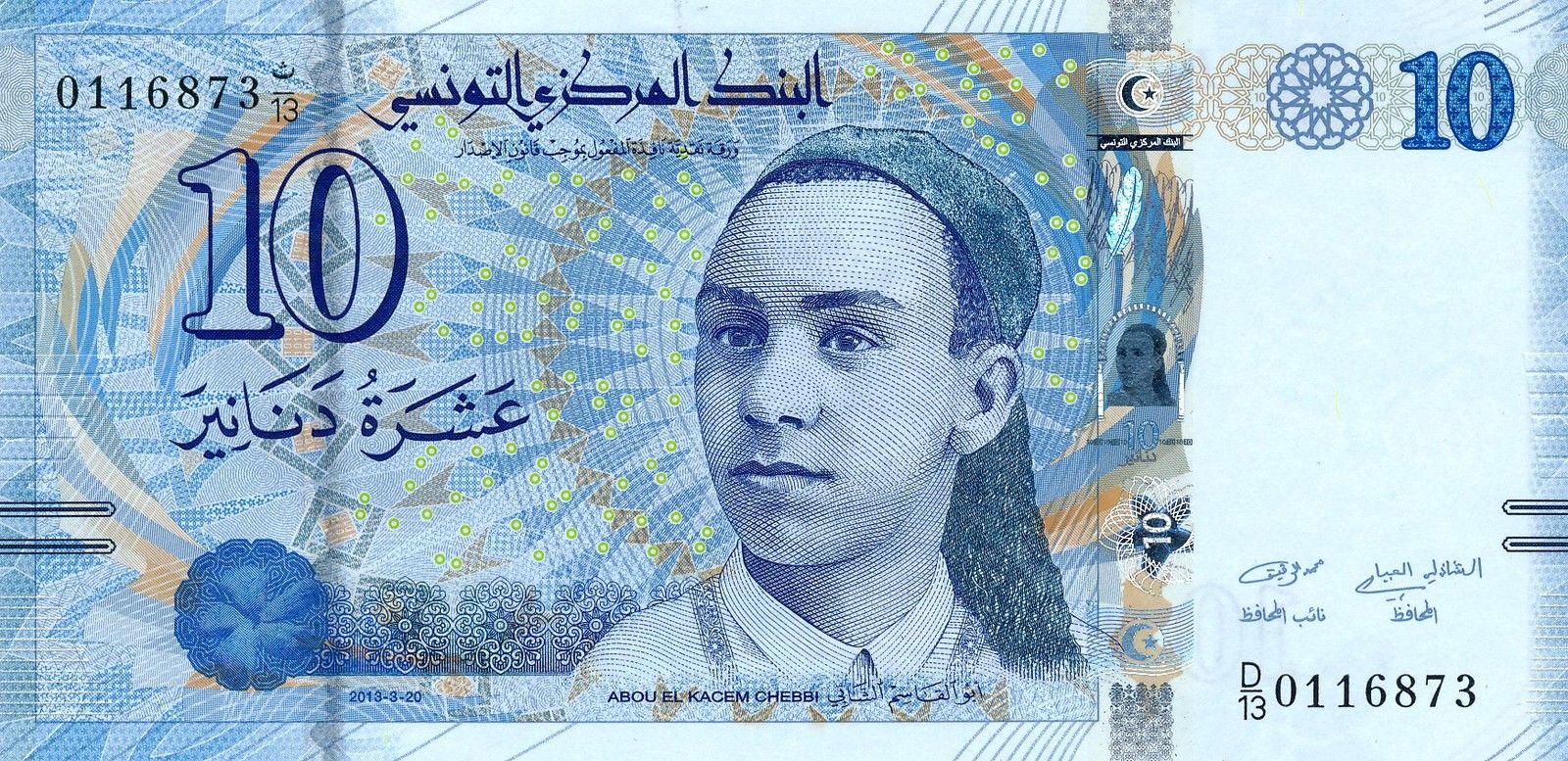
A Siege of Salt and Sand starts off solemnly with a quote from Aboul Qacem Echebbi, the young Tunisian poet who wrote the final two verses of the Tunisian national anthem. Echebbi’s foreboding quote addressed “To the Tyrants of the World” (McNeil, 2014) becomes prophetic after watching the documentary all the way through.
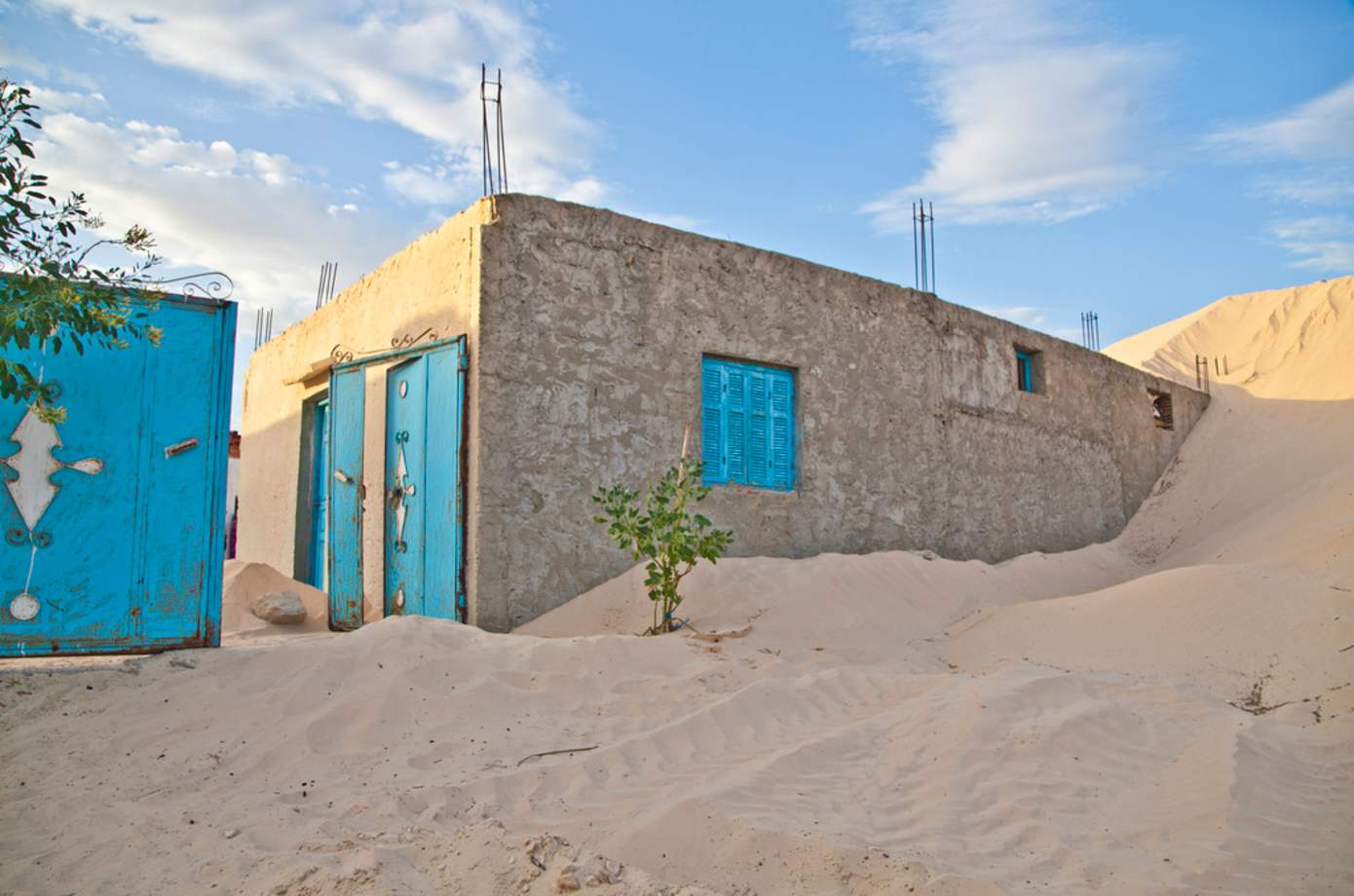
The disastrous effects of climate change are suffocating the Tunisian people between the rising sea level and sand incursion. The activist film attempts to shed light on the bleak situation by bringing much needed attention to the Tunisian governments lack of attention towards the communities most affected by the environmental encroachment.
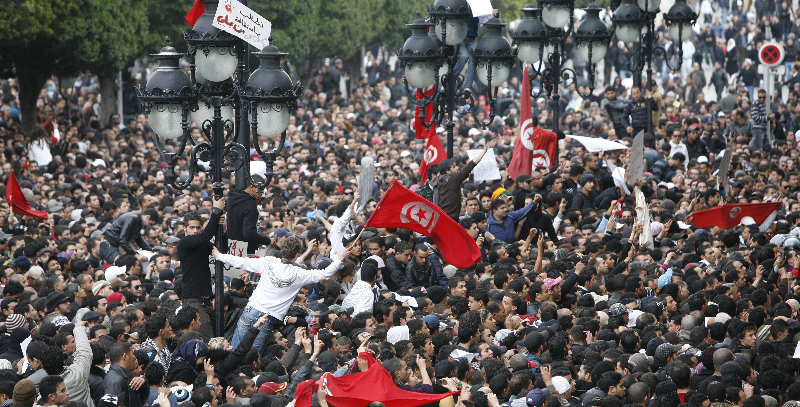
The films clever title hints at the overthrows of sea water (salt) and saharan sand, but doesn’t mention one of the most historically significant issues throughout the Middle East and North Africa, Water, or its lack thereof. Although the MENA is typically a very dry region, local farmers have been able to raise sheep and other agriculture, but climate change has exacerbated the regions lack of rainfall. Water, second only to oxygen in sustaining life, has become so expensive that farmers are forced to give up their livelihoods and migrate into nearby cities. The frustrations that concentrated the Tunisian population into cities sparked the Arab spring and the eventual overthrow of the Ben-Ali regime. Although the documentary was made in 2014, after the overthrow, it serves as a grave reminder to other countries in the region of what can happen if authoritarian governments are allowed to continue to exploit the land and people they govern.
A Siege of Salt and Sand seized my heart and I got emotional, both for the Tunisian communities and for future generations that will live in a weakening world. I think the format of the film was very effective because it’s in our nature to sympathize with humans, not statistics that are meant to briefly scare us into change before we use the plastic straw anyway.
Bibliography
A Siege of Salt and Sand. Directed by St McNeil. Tunis: Radhouane Addala, 2014.
Guiding Question:If oil rents produce peculiarly damaging political and social outcomes in MENA, is this due to the unusual size of those rents or to the interaction of those rents with other factors?
Oil rents (a country’s oil revenues) have two main monetary variables; the value of crude oil production at world prices minus the total cost of producing/extracting the oil. For example Saudi Arabia has a huge amount of strategic oil rents in addition to ‘sweet’ surface level crude oil that has a very low production cost.
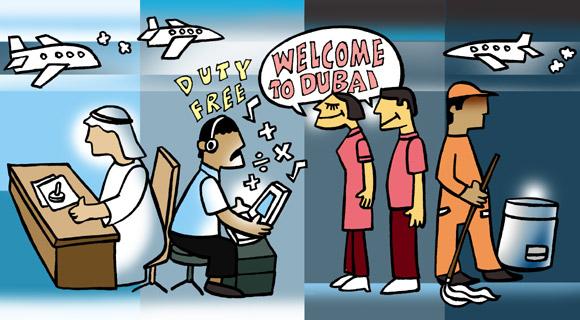
As someone who benefitted from the U.A.E’s oil rents for 12 years, I find it hard to attribute political and social outcomes to the size of rents, but looking back on it, I can see how repressed and divided Dubai really was. In class we rarely mention the U.A.E and for good reason because comparatively, other countries in the MENA with high oil rents in addition to large populations have more volatile rent-interaction factors that dwarf their democratic development.
In “Does Oil Hinder Democracy” Ross looks at the three causal mechanisms that may explain the link between oil rents and authoritarian rule among oil rich states. The first mechanism Ross touches on is “The Rentier Effect” also known as the taxation effect or its lack thereof. The theory “suggests that when governments derive sufficient revenues from the sale of oil, they are likely to tax their populations less heavily or not at all,” (Ross, 332) the theory goes on to say that for this reason citizens are less likely to demand representation and accountability from their government. In my case, my family and I reaped the benefits of not paying income tax while never questioning the mandatory midnight curfew. Another component of the rentier effect is “the spending effect: oil wealth may lead to greater spending on patronage, which in turn dampens latent pressures for democratization.” (Ross, 333), but I like to think of this effect in terms of choosing to spoil a child by giving it candy when it cries, rather than lovingly cradling it into a more relaxed state. The third and in my opinion, most frightening component of the rentier effect is the group-formation effect and once again its lack thereof (I apologize for the repetition, but it’s a by-product of discussing the rentier effect which is in itself repetitive repression.). Group-formation effect “implies that when oil revenues provide a government with enough money, the government will use its largesse to prevent the formation of social groups that are independent from the state and hence may be inclined to demand political rights.” (Ross, 334). This third effect is most frightening to me because it’s the one that I felt the most during my time in Dubai. I didn’t question the social divide between the local elite (less than 10% of the entire population), westerners like myself and laborers (people from LDCs like India, Pakistan and Philippines). As I got older and wiser, I realized the Dubai Monarchy was committing several human rights violations against their lowest caste, but my activist thought would always be accompanied by a paralyzing despair when I remembered that I, a foreigner in the middle class, could do nothing for them.
In USA we pride ourselves on having the strongest military force in the world, but if we imagined that America’s democratic government functioned like Iran’s “Rentier absolutist state,” (Skocpol) we would have the most repressing military in the world. This analogy clarifies “The Repression Effect,” which is an authoritarian governments inclination to repress democratic demands with internal security that is fueled by the country’s oil revenues. In this context, a synonym for internal could be secret or coercive because the security these authoritarian states provide only benefit their continued control over government, natural resources and most notably the hindrance of popular pressures.
Unlike the Rentier and Repression effects, “The Modernization Effect” is independent of resource wealth and the state. The theory is based on resource driven economic growth that leads to “higher education levels and rising occupational specialization” (Inglehart) however, when there is economic development but none of the specified social changes, democratic development will remain stagnant.
I’d like touch on the distinction between RRLP countries and RRLA in relation to the development of their regime type. For example many of the RRLP countries like Saudi Arabia, U.A.E and Qatar are Monarchies that largely go unchallenged thanks to their resource wealth that translates into a high GDP per capita that monetarily appeases frustrations that aren’t met by rentier effects, whereas in RRLA countries like Iran and Libya, the wealth is more repressively protected by Authoritarian governments because the larger population has a much lower GDP per capita and in turn much higher governmental resentment that stems from an underpaid and underemployed working class.
After carefully reading both Ross’s article and the relevant chapter I have found that unusually large oil rents leaves a state more susceptible to having a government that seeks to control its valuable resources. The size of the resource rents affect the likelihood of that happening and throughout the middle east central governments have capitalized then monopolized into a monarchy or an authoritarian regime. Once this system of government is established, the self proclaimed owners of the oil seek to control the wealth it generates and continues to do so by utilizing the aforementioned rentier and repression effects. Upon discovering oil in the MENA, the ability for nation states to form a democratic government was simultaneously lost, the value of the precious resource proved to be too valuable and it led to groups wanting to control it. However, not all hope is lost, if monarchical and authoritarian regimes realize that having total control of oil wealth doesn’t lead to successful development as a country (or they just watch the video we saw at the end of last class) they can turn their thirty or so year oil reserves into an ever growing economy that isn’t fueled by oil, but rather the people who identify with the land they tear apart to get the oil.



 Authoritarianism in the MENA